Waste Zoning
2023 · Individual work · Eunpyeong-gu, Seoul, South Korea
- As part of
- Graduation project
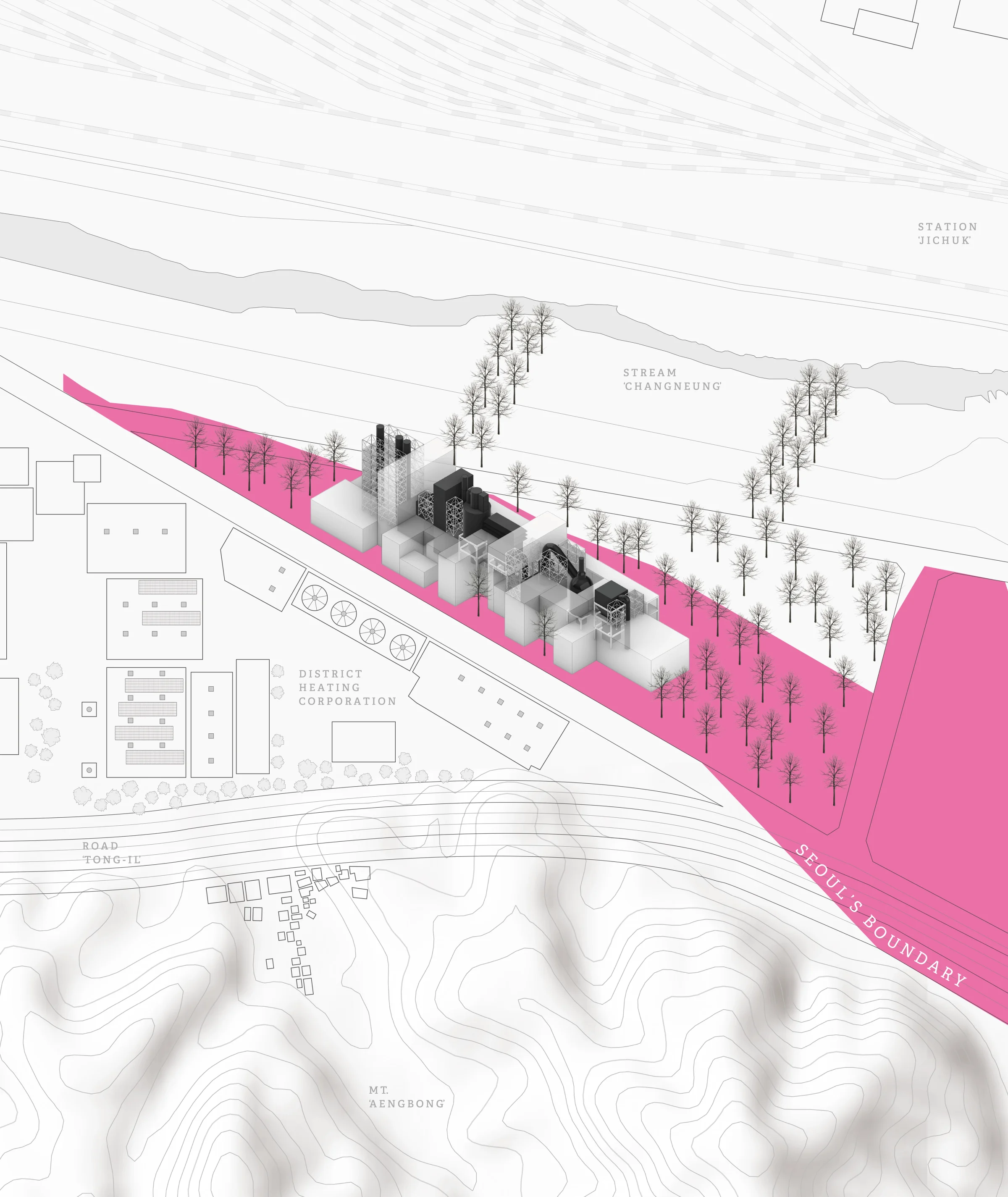
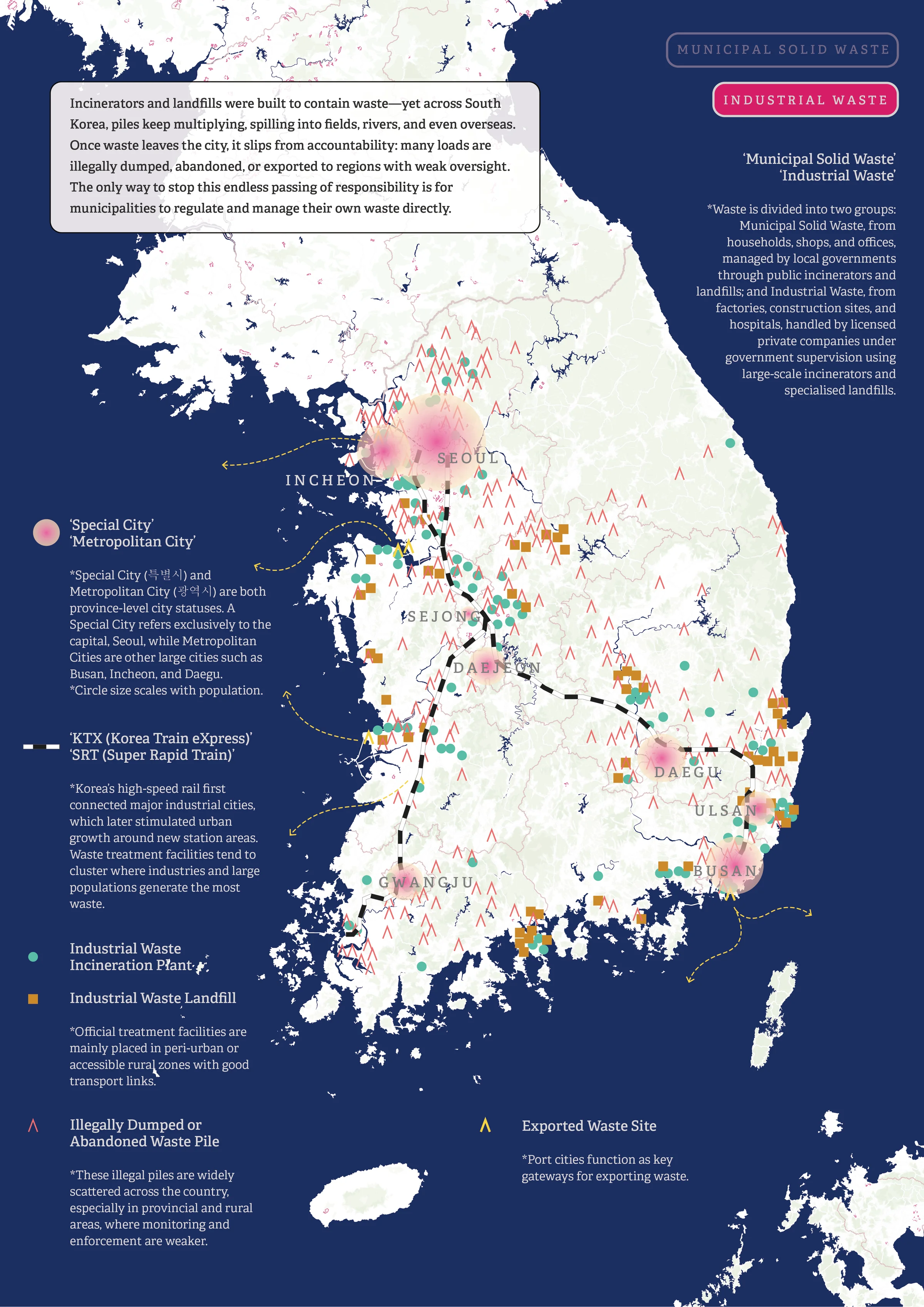
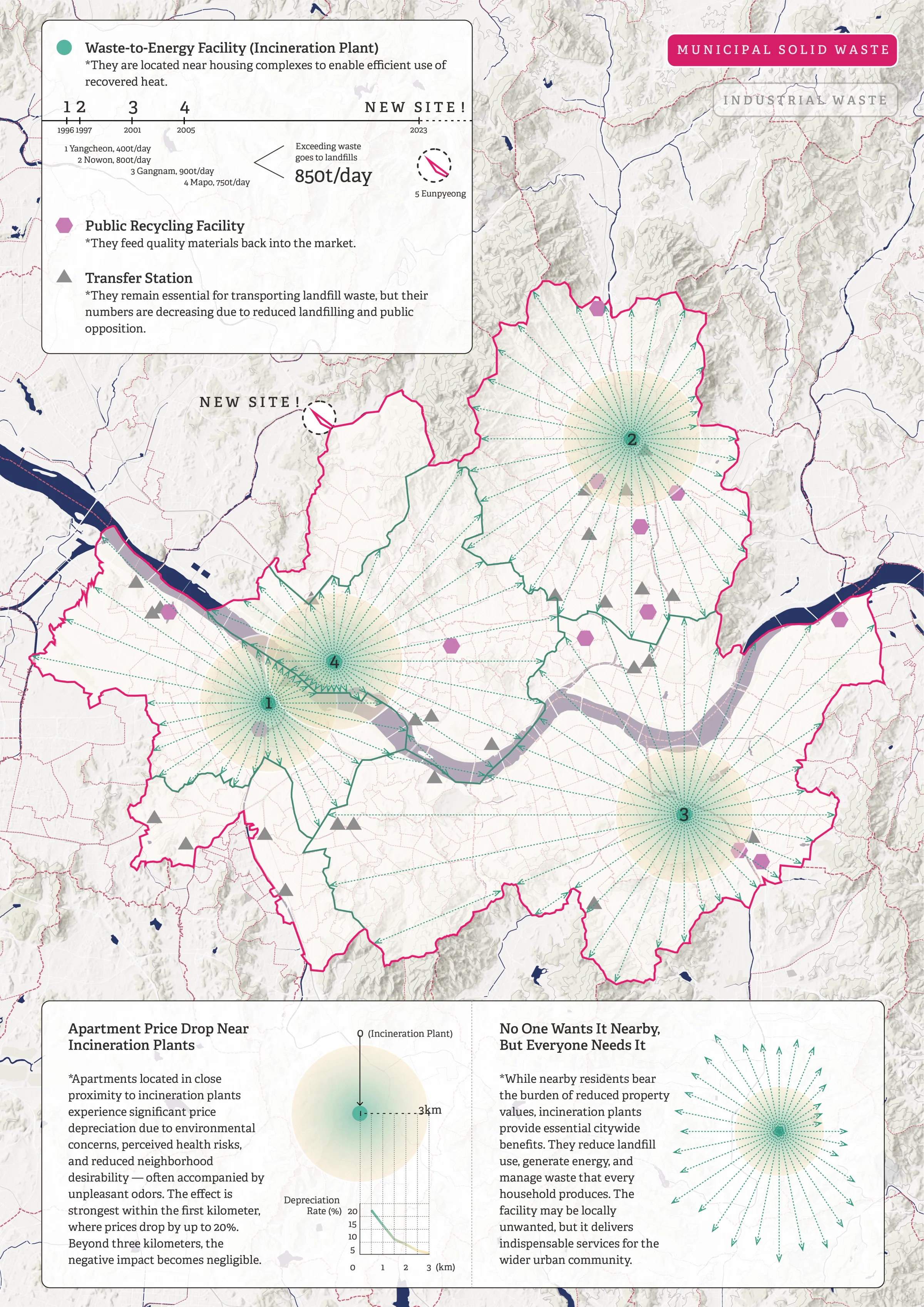
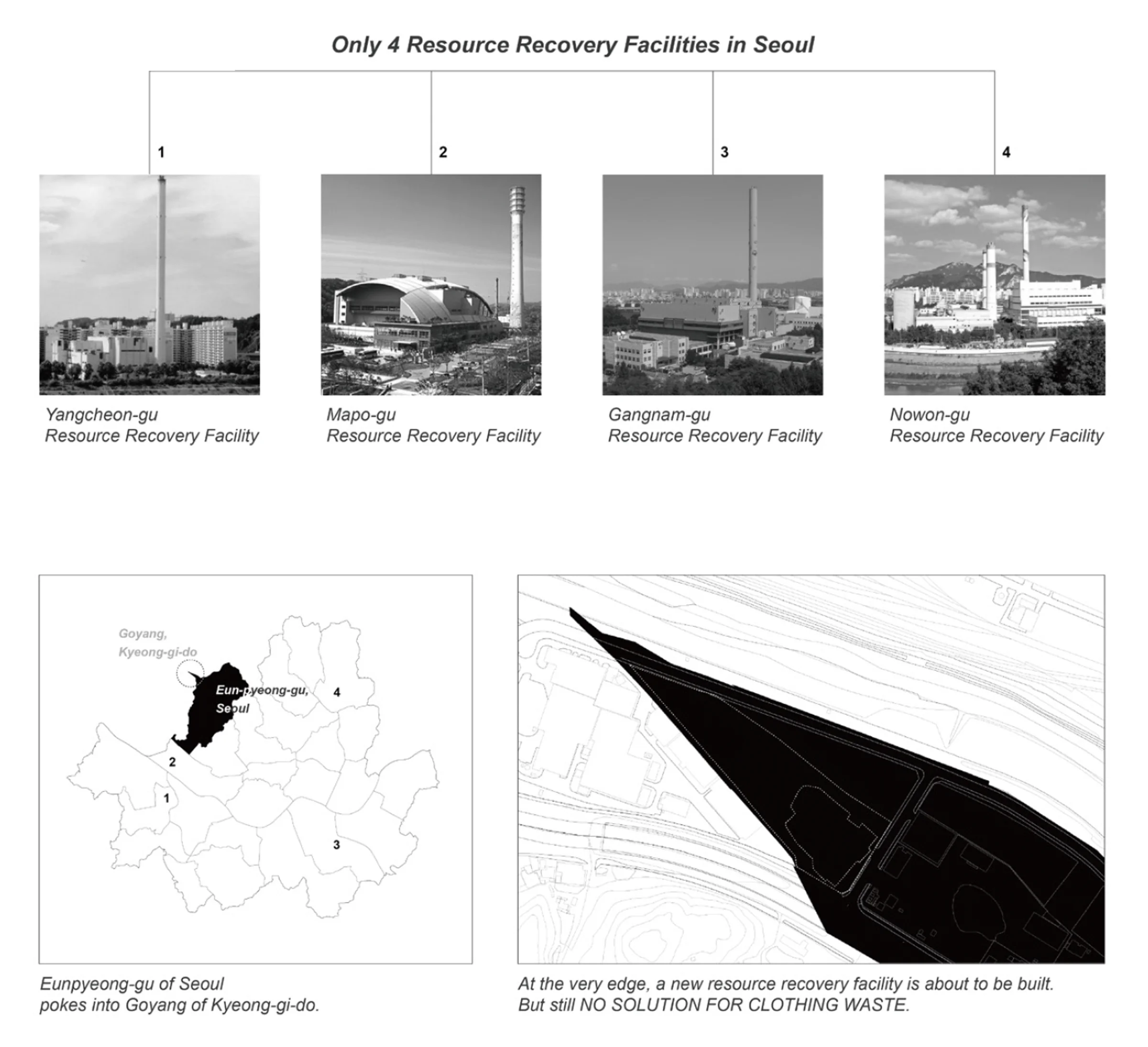
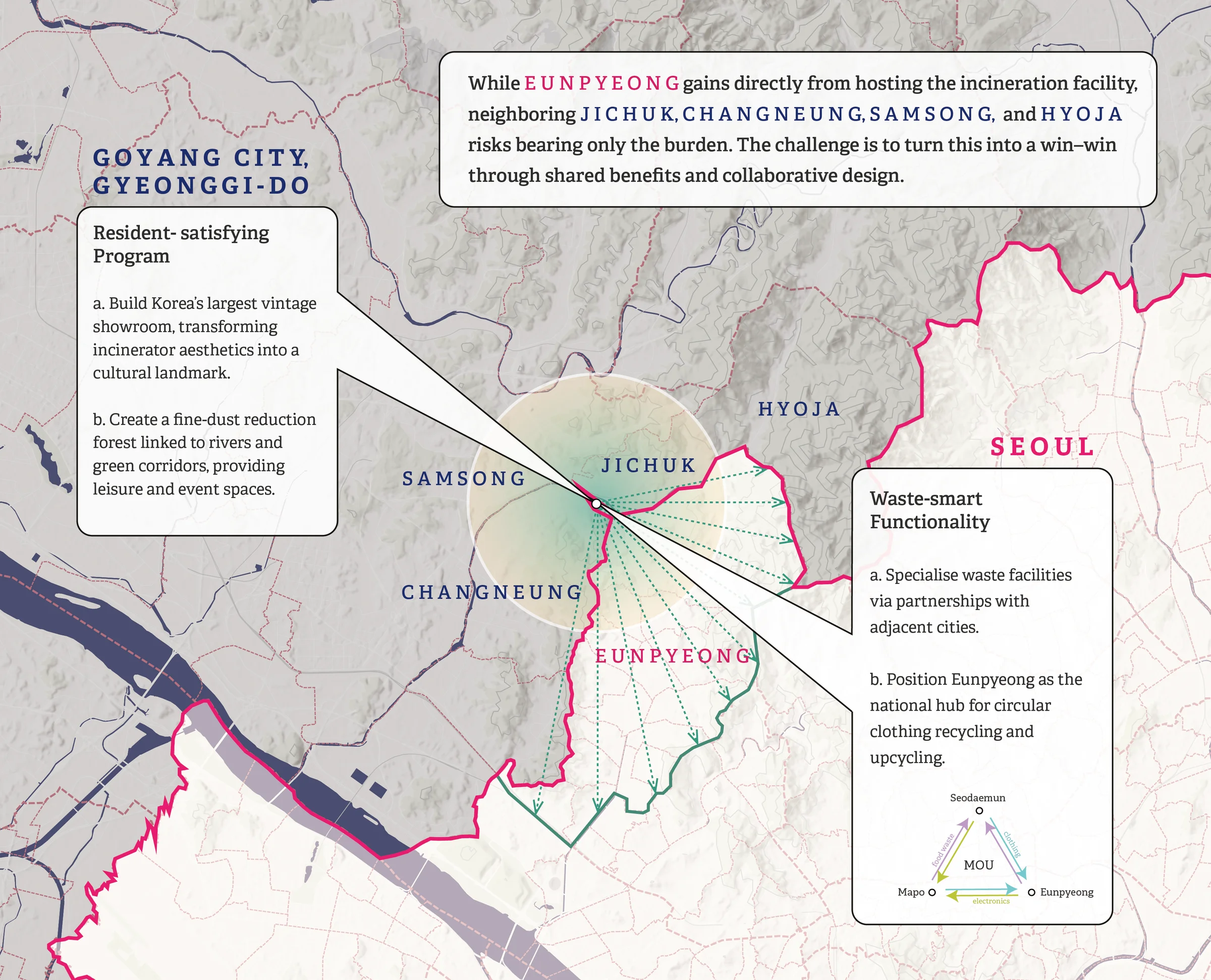
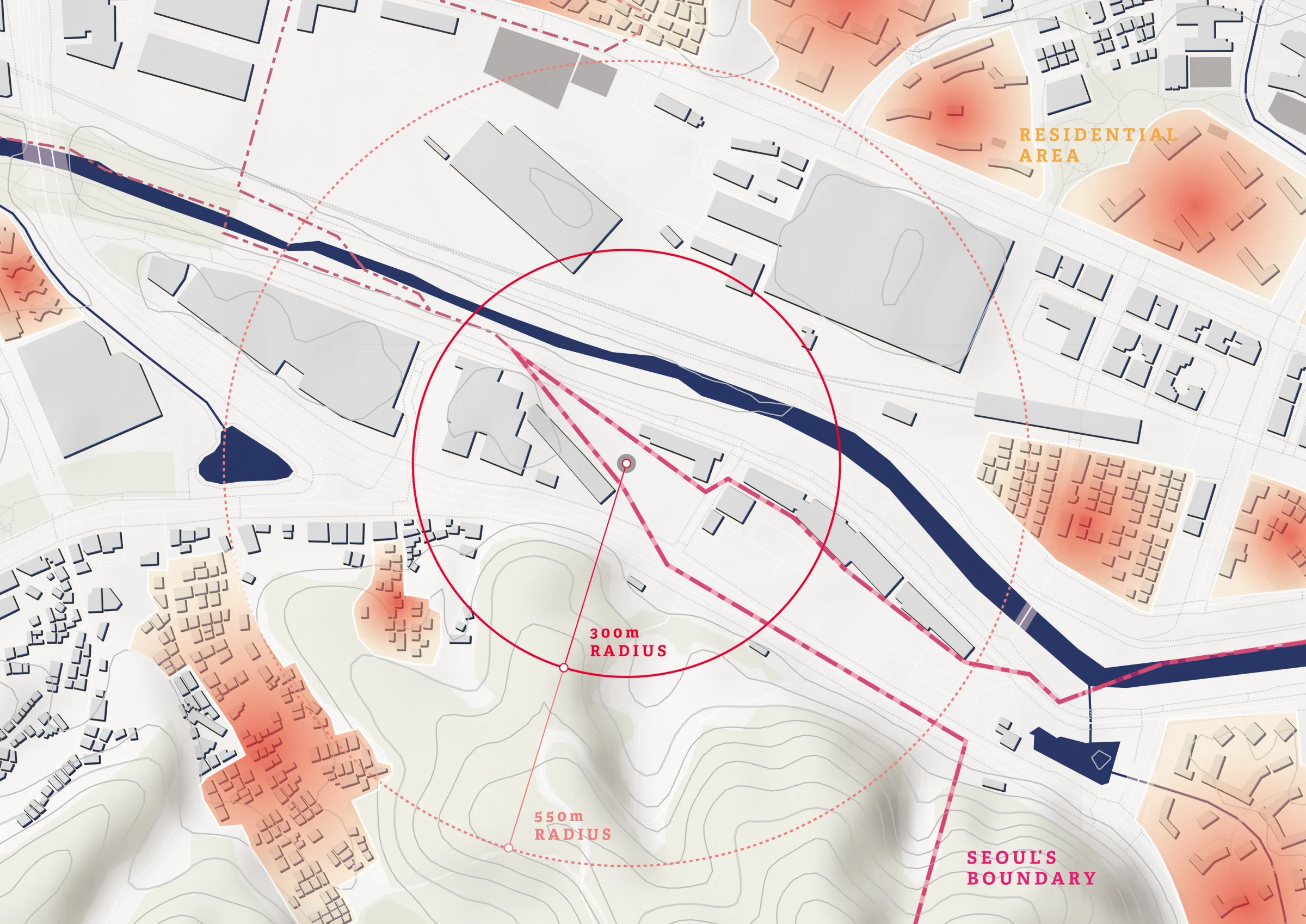
This project rethinks waste infrastructure by confronting the spatial, environmental, and political tensions surrounding incineration facilities in Korea. Rather than treating waste plants as hidden, undesirable back-of-house systems, the proposal positions them as visible and productive civic infrastructures. The project focuses on Eunpyeong, where jurisdictional boundaries create conflict. While one district benefits from hosting the facility, neighboring areas bear the environmental and social burden. This imbalance reveals a broader issue of fragmented responsibility in waste management.
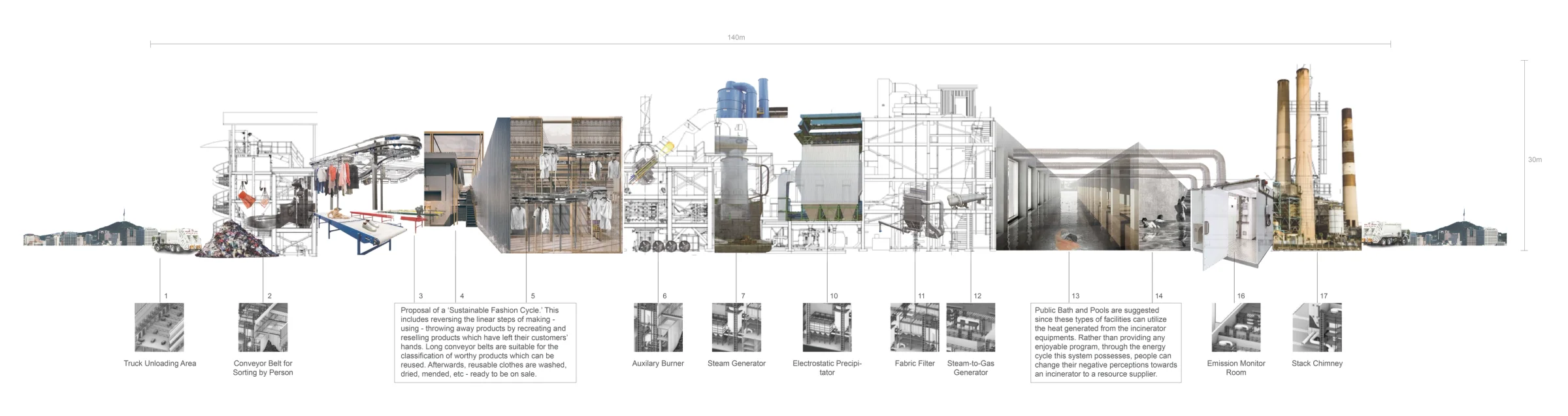
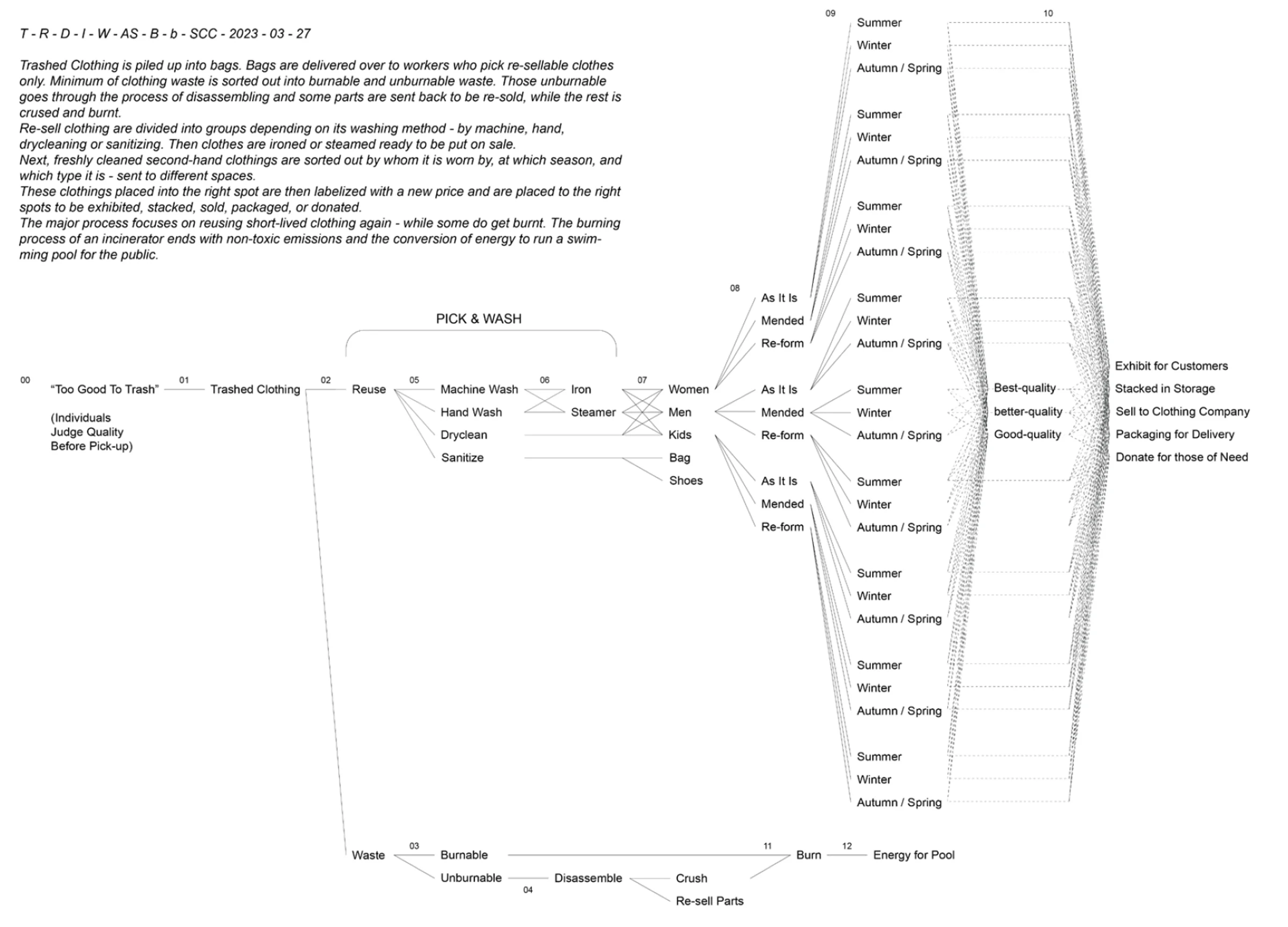
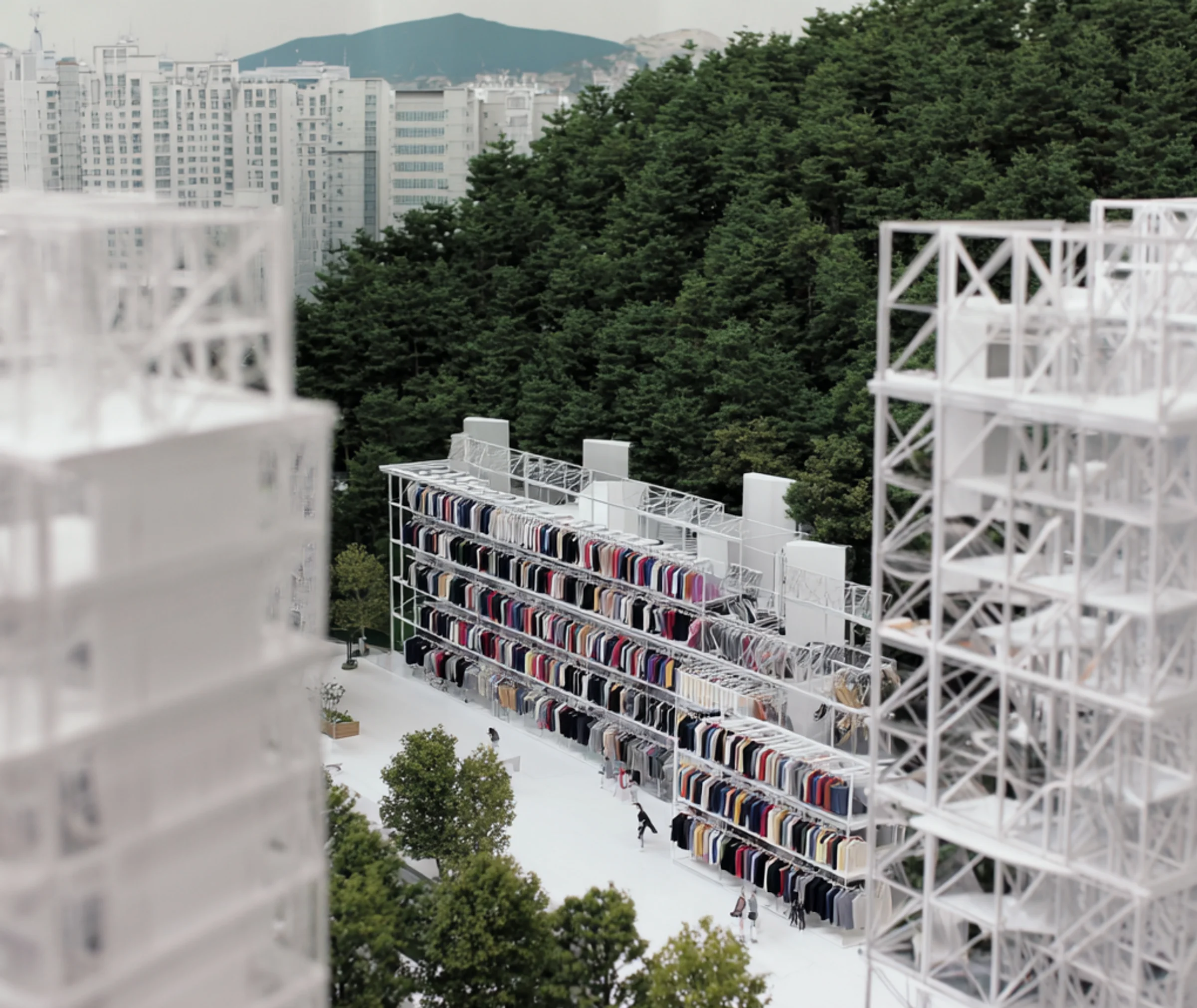
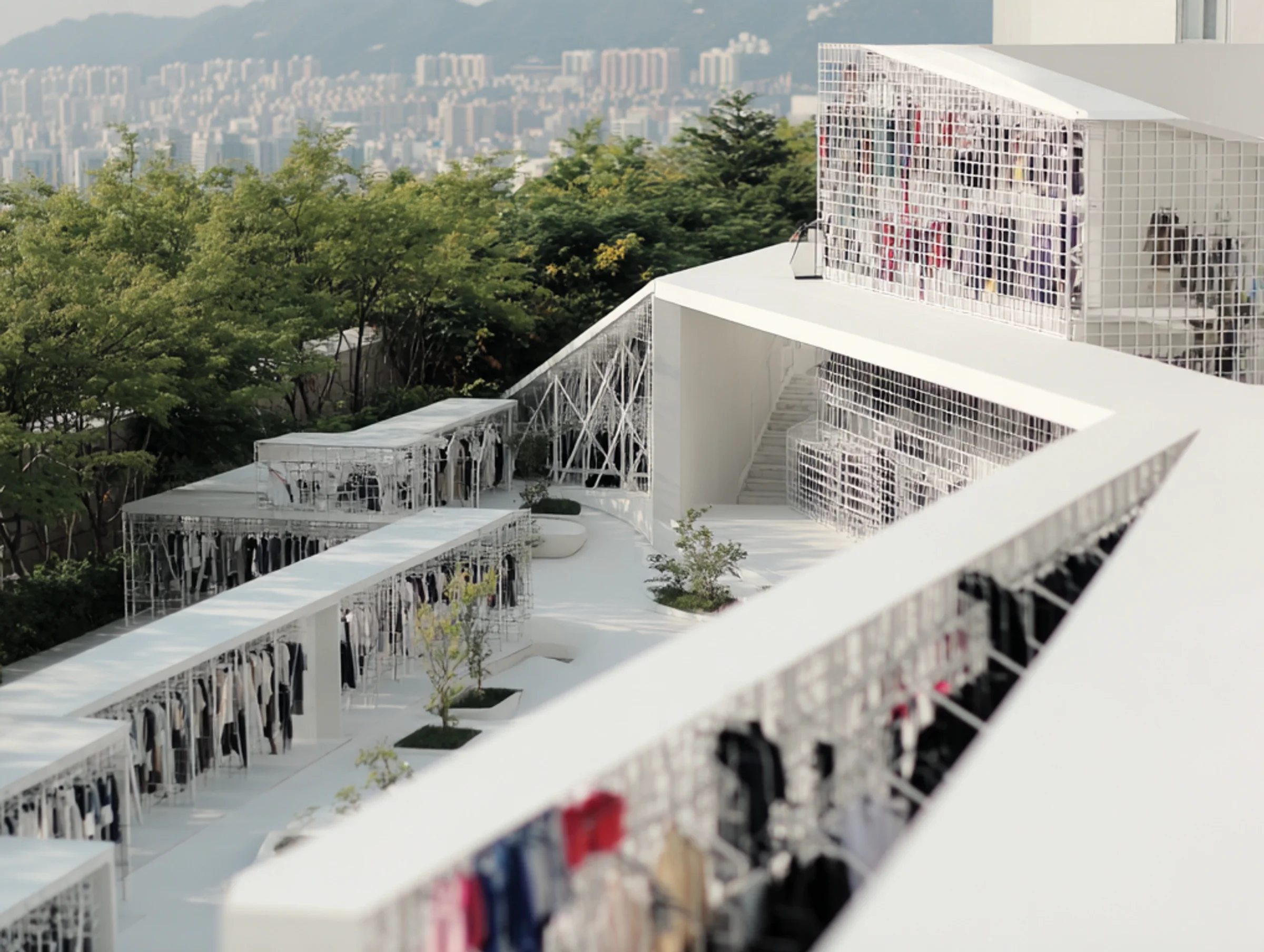
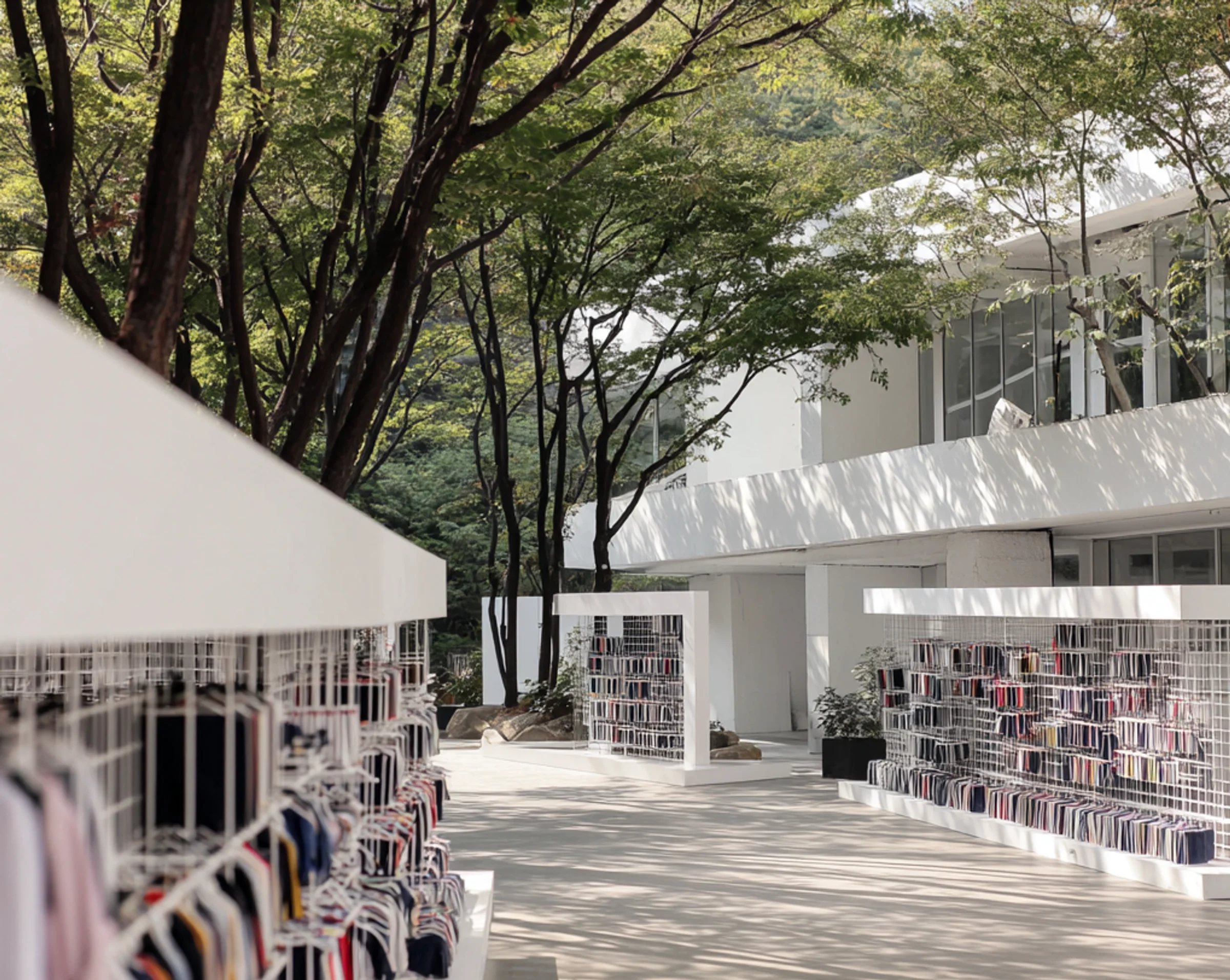
The proposal reframes the incinerator as part of a circular economy system, transforming it into a waste-to-resource hub with a specific focus on textile waste. Instead of linear disposal, clothing waste is collected, processed, recycled, and redistributed through an integrated system that combines industrial processes with public-facing programs. The facility incorporates sorting, treatment, energy generation, and material recovery, while also introducing spaces such as recycling showrooms, education platforms, and public landscapes.
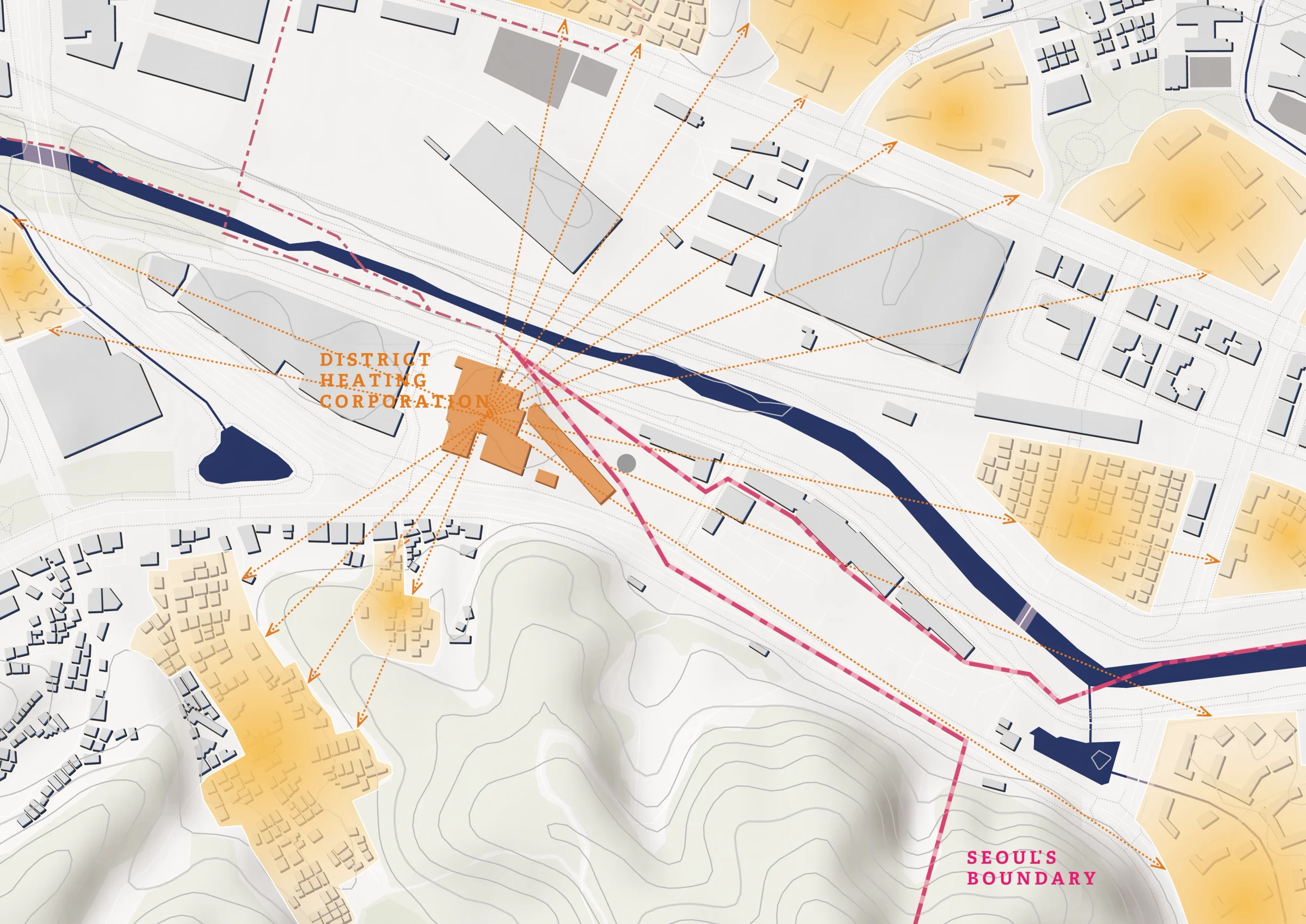
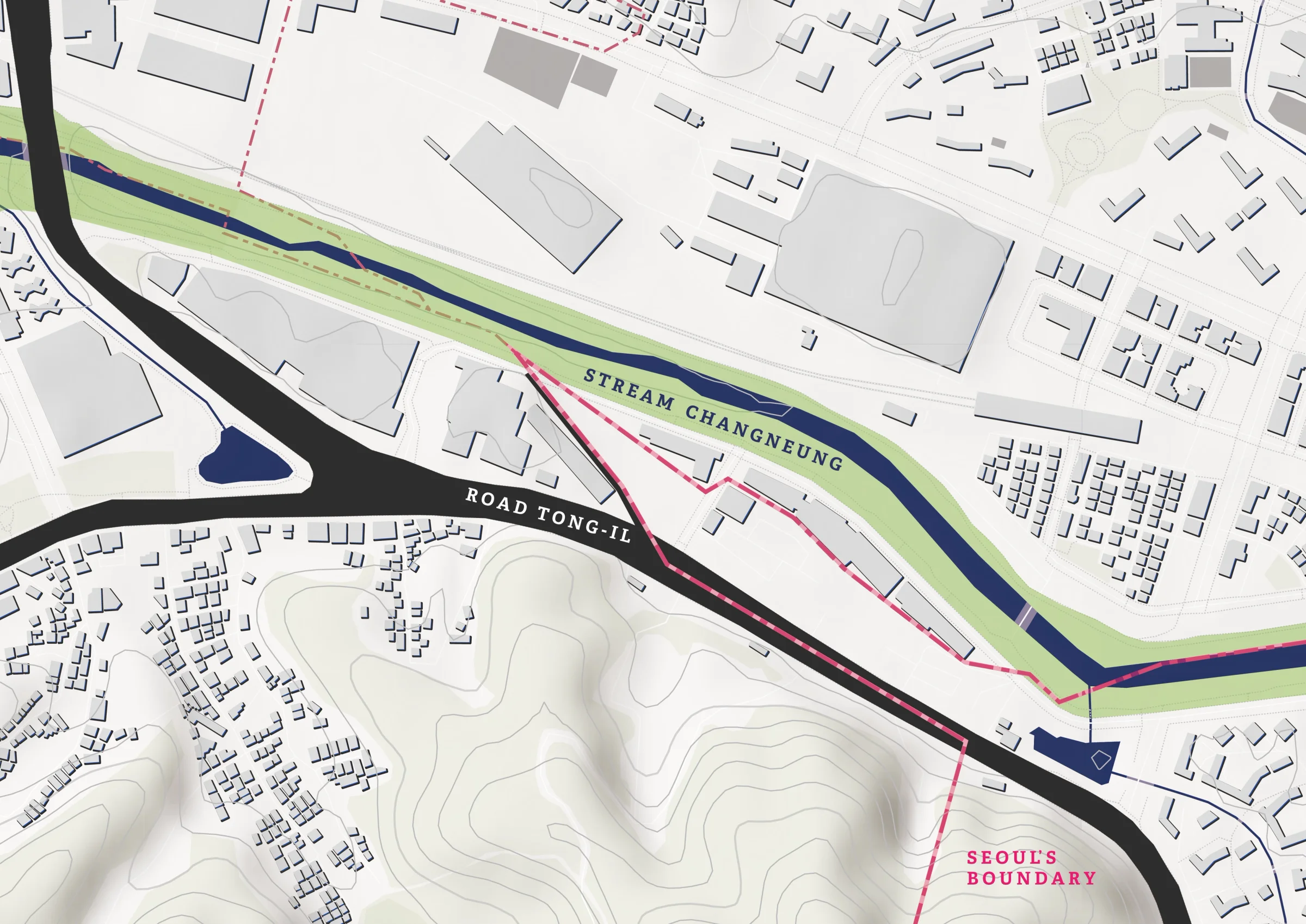
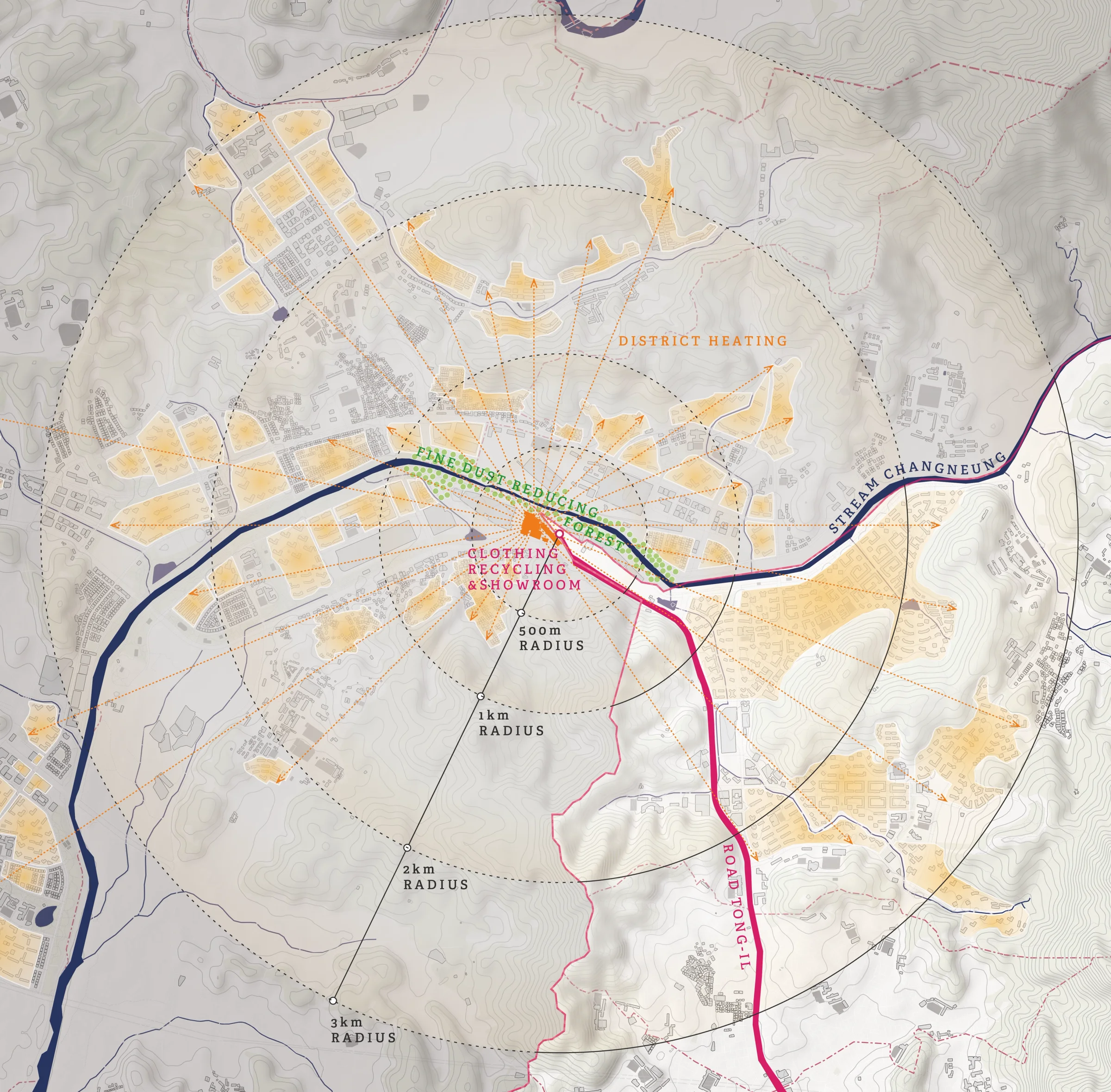
Spatially, the project negotiates between infrastructure and environment. It establishes buffer zones, ecological corridors, and controlled setbacks to mitigate environmental impact while reconnecting the site to surrounding urban and natural systems. Proximity to district heating infrastructure allows recovered energy to be redistributed locally, reinforcing the circular logic. At the territorial scale, the project proposes a network of waste-to-energy nodes that distribute responsibility more equitably across regions, reducing the concentration of burden in any single area.
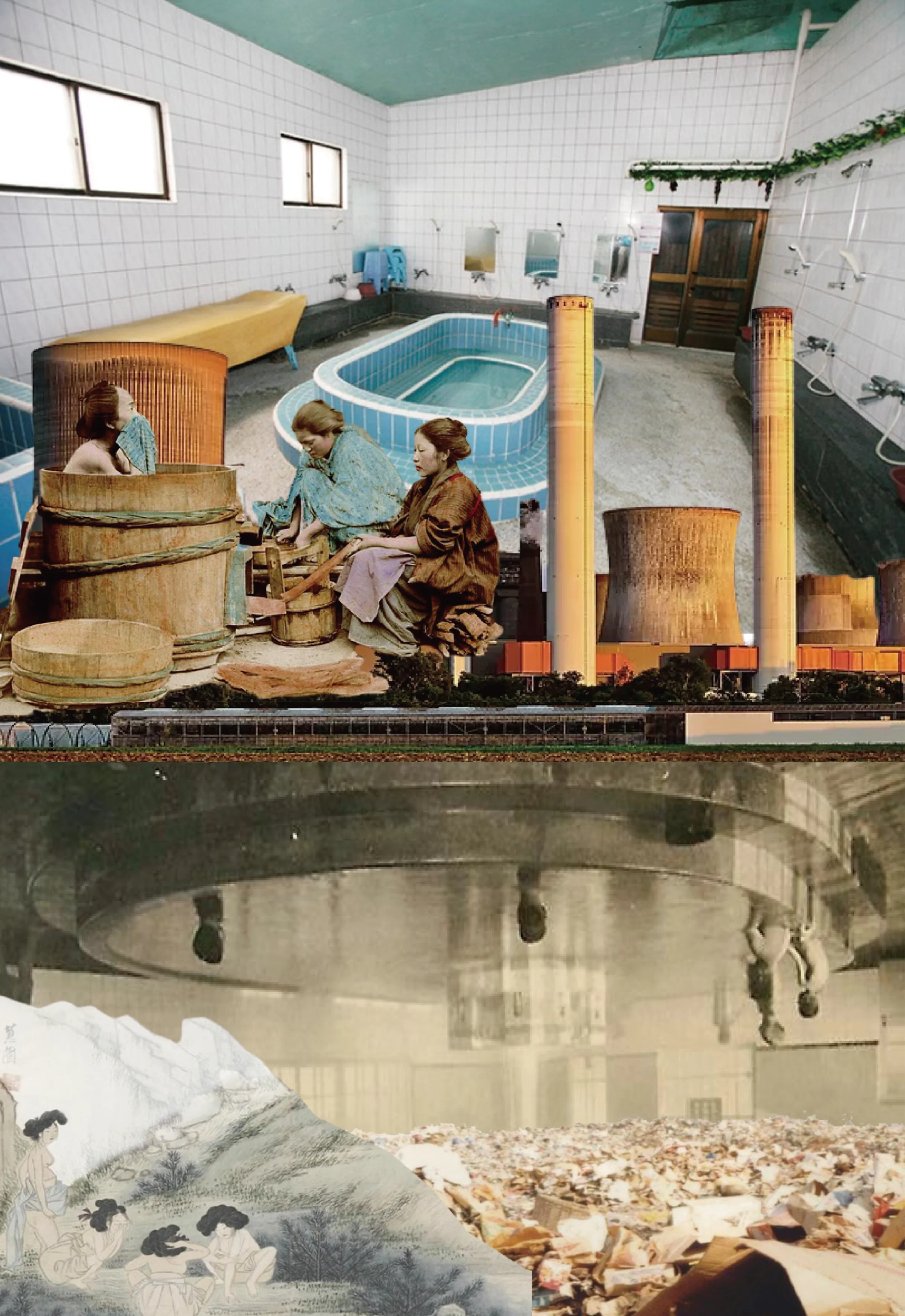
A critical aspect of the design is visibility. By exposing industrial processes through architecture, the project shifts public perception of waste infrastructure from a hidden liability to a shared civic asset. It makes the lifecycle of waste legible, encouraging awareness, accountability, and participation in resource cycles.
Ultimately, the project positions waste not as an endpoint, but as a starting point for new forms of production, energy, and public engagement. It demonstrates how infrastructure can operate as both an environmental system and a social platform.