Symbiotic Thamesmead
2025 · Lead designer and strategist · Thamesmead, London, United Kingdom
- As part of
- Academic work
- In partnership with
- Team of 4
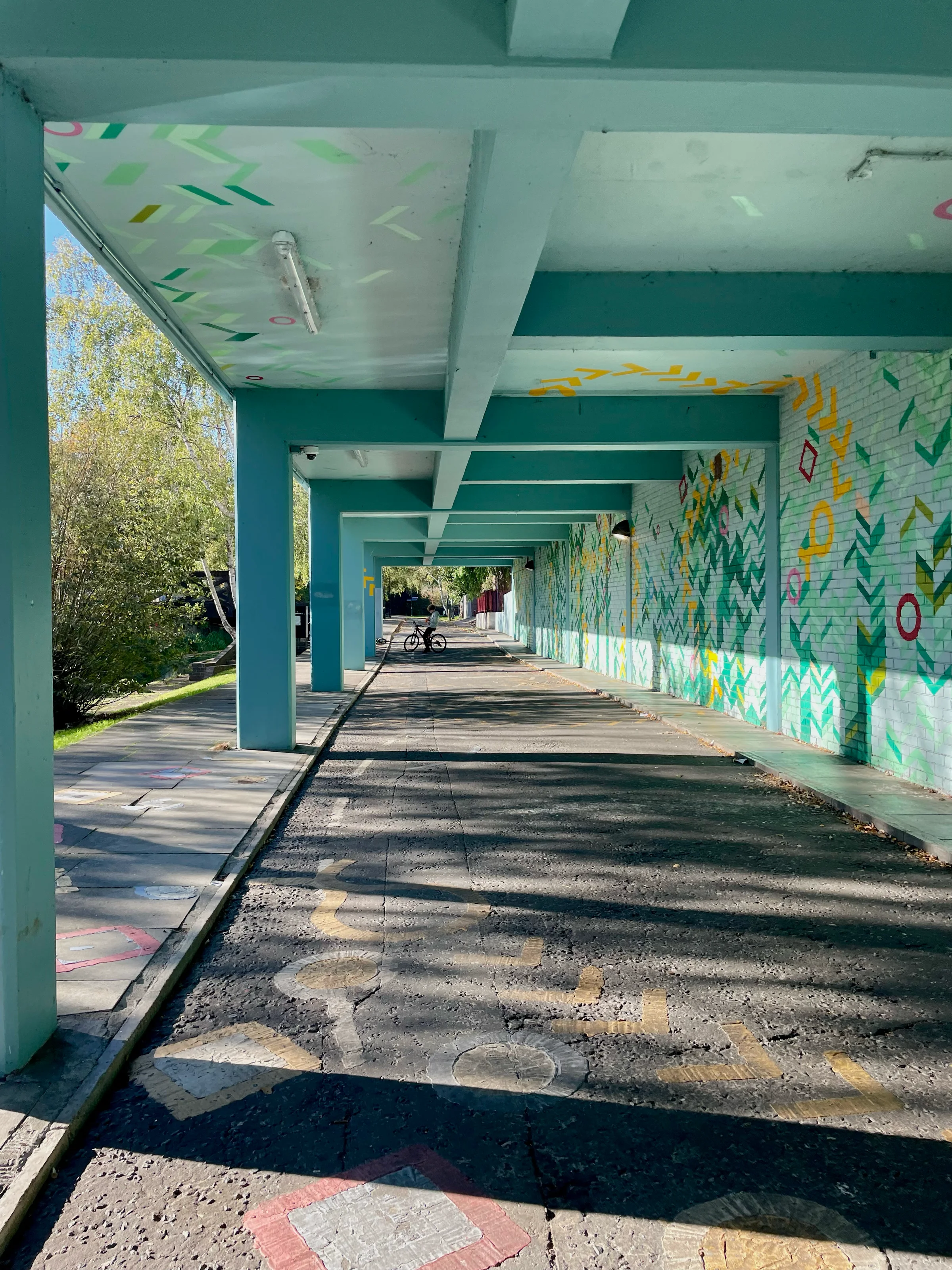
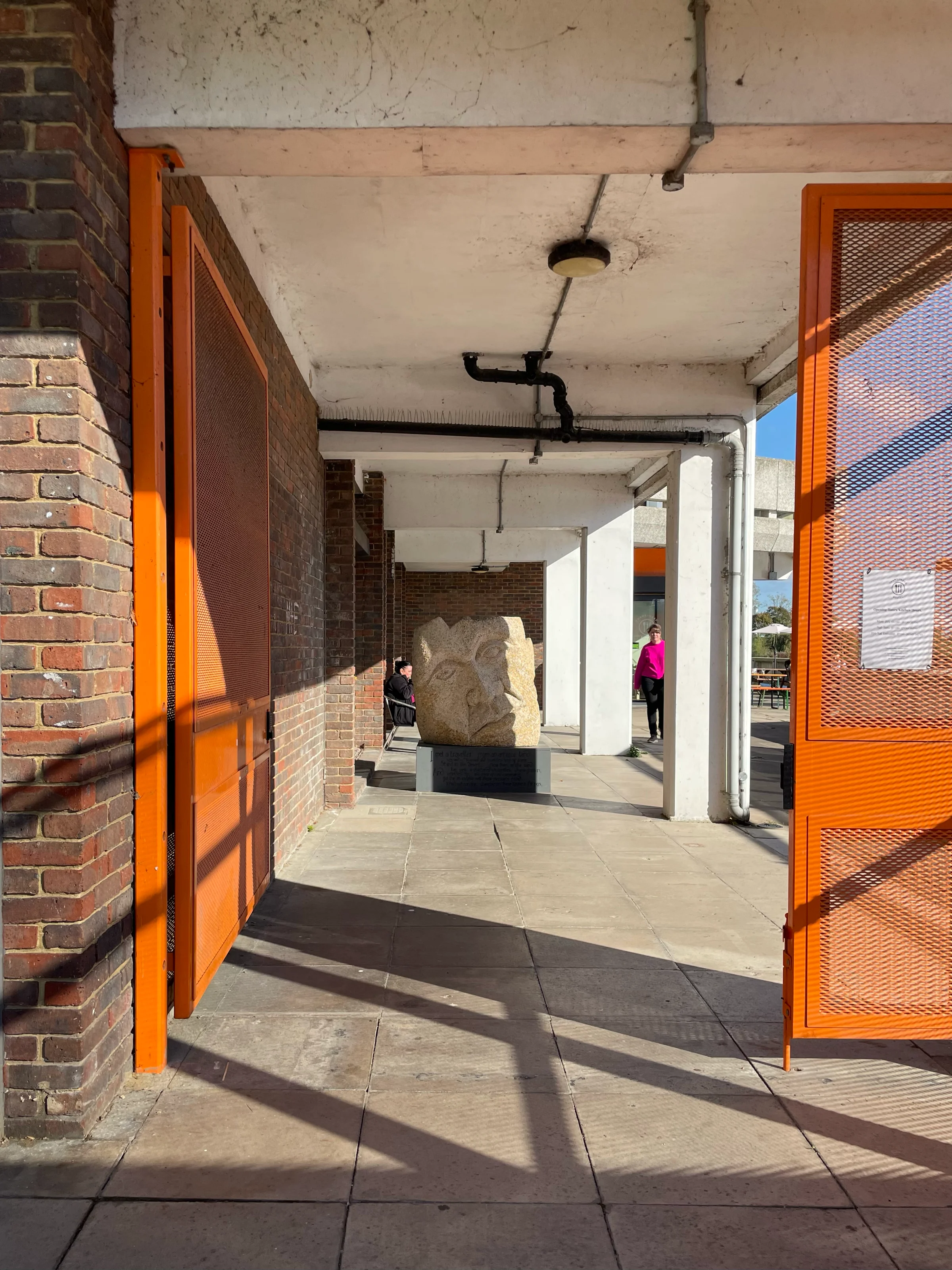
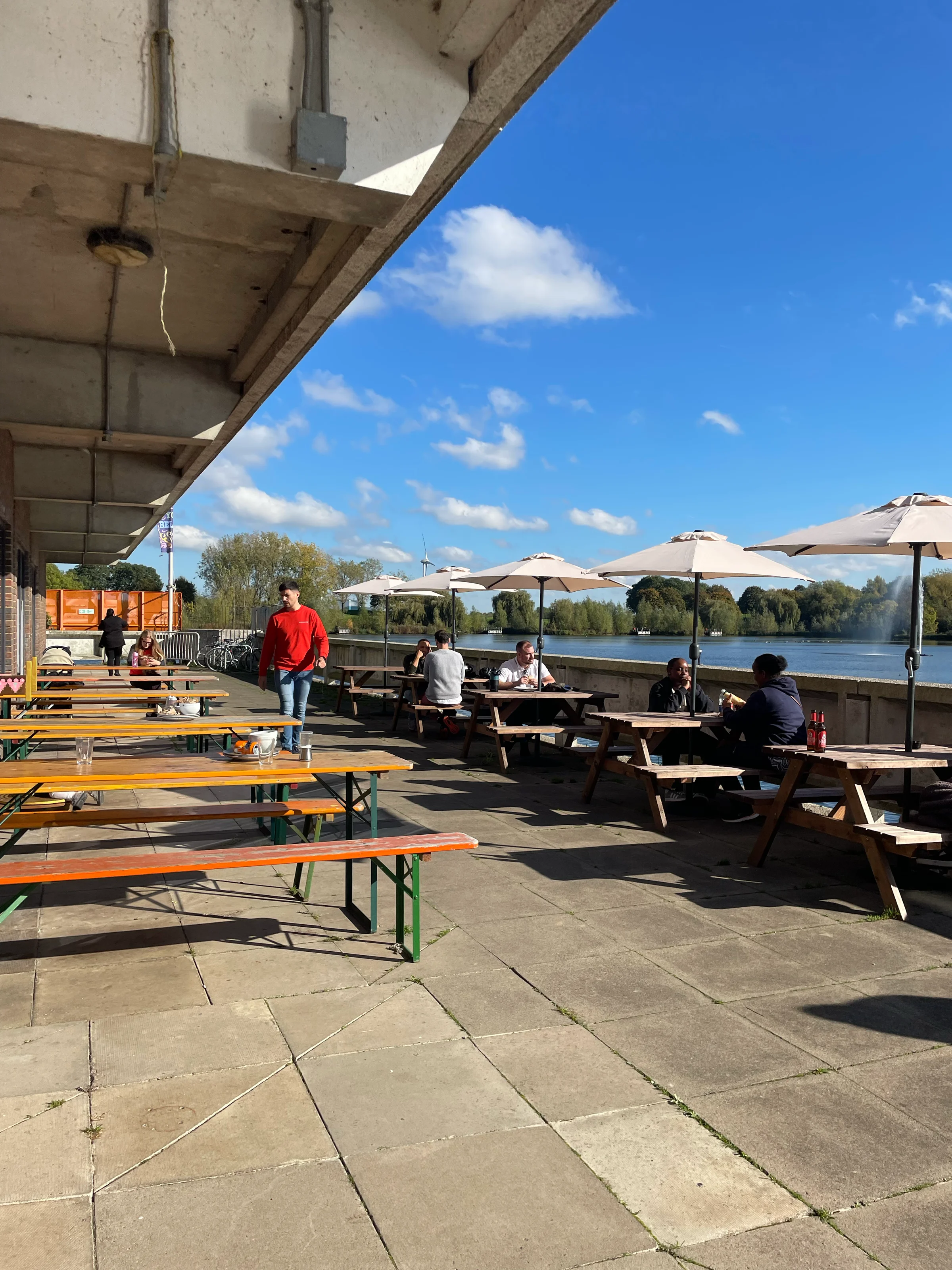
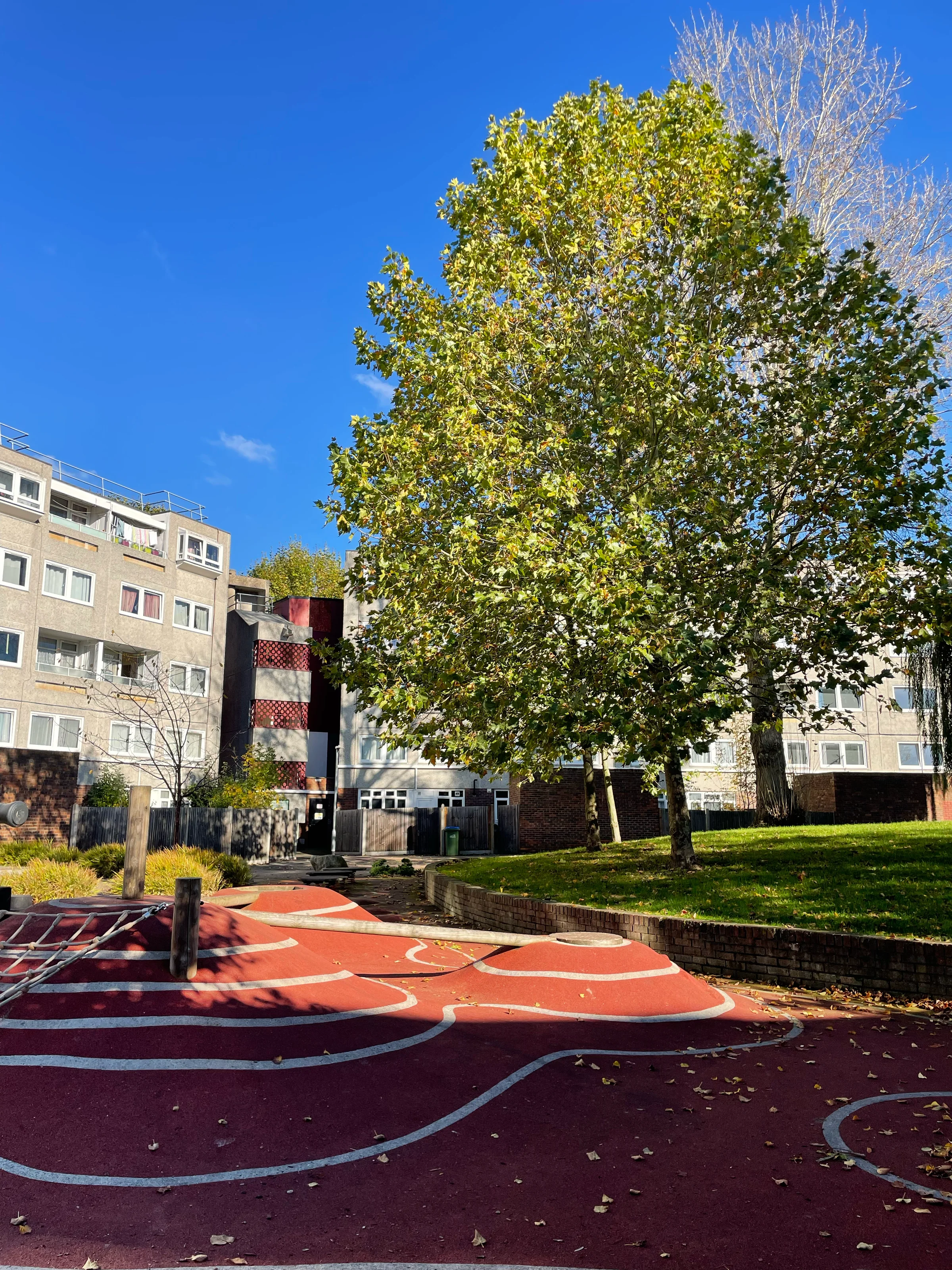
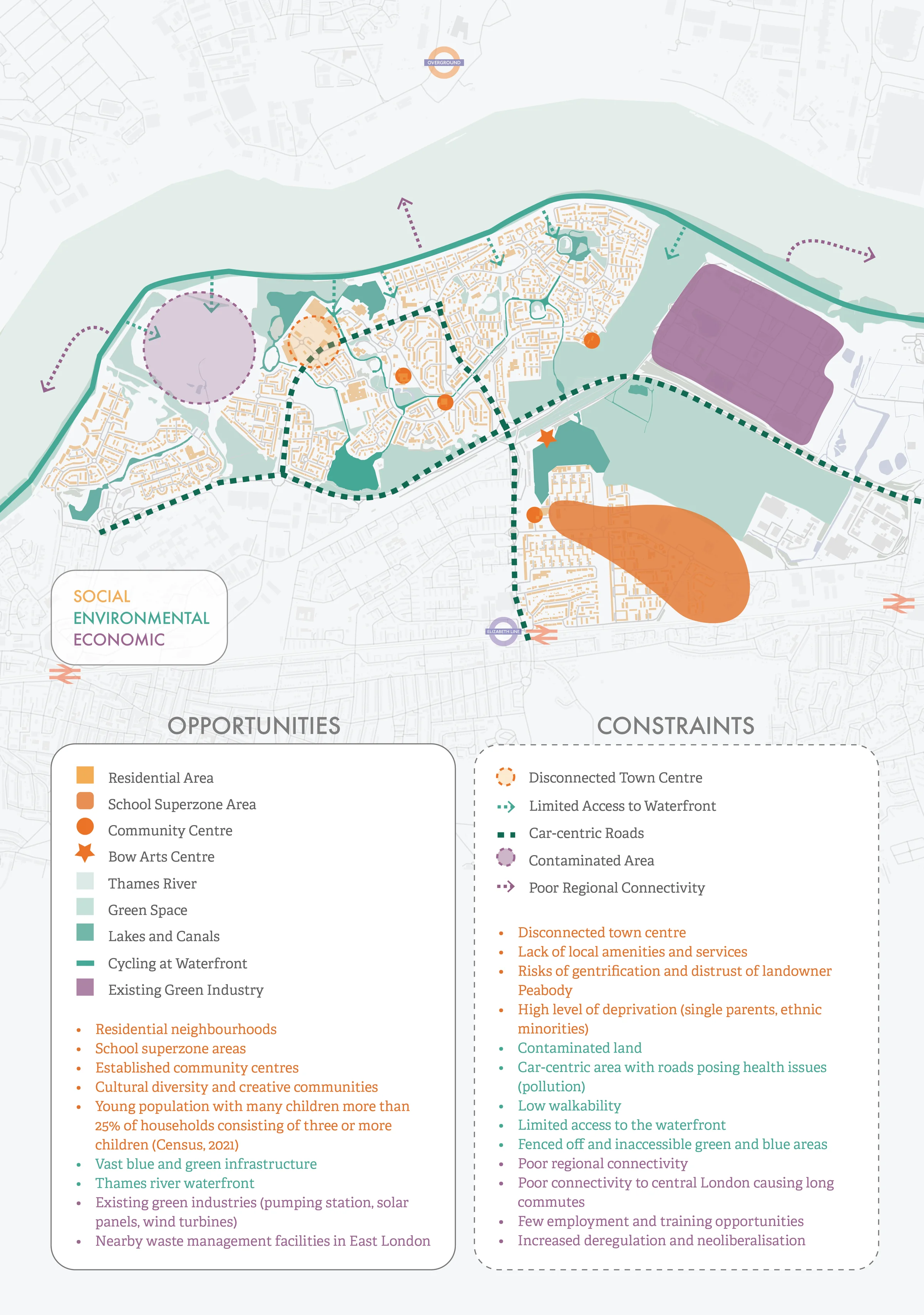
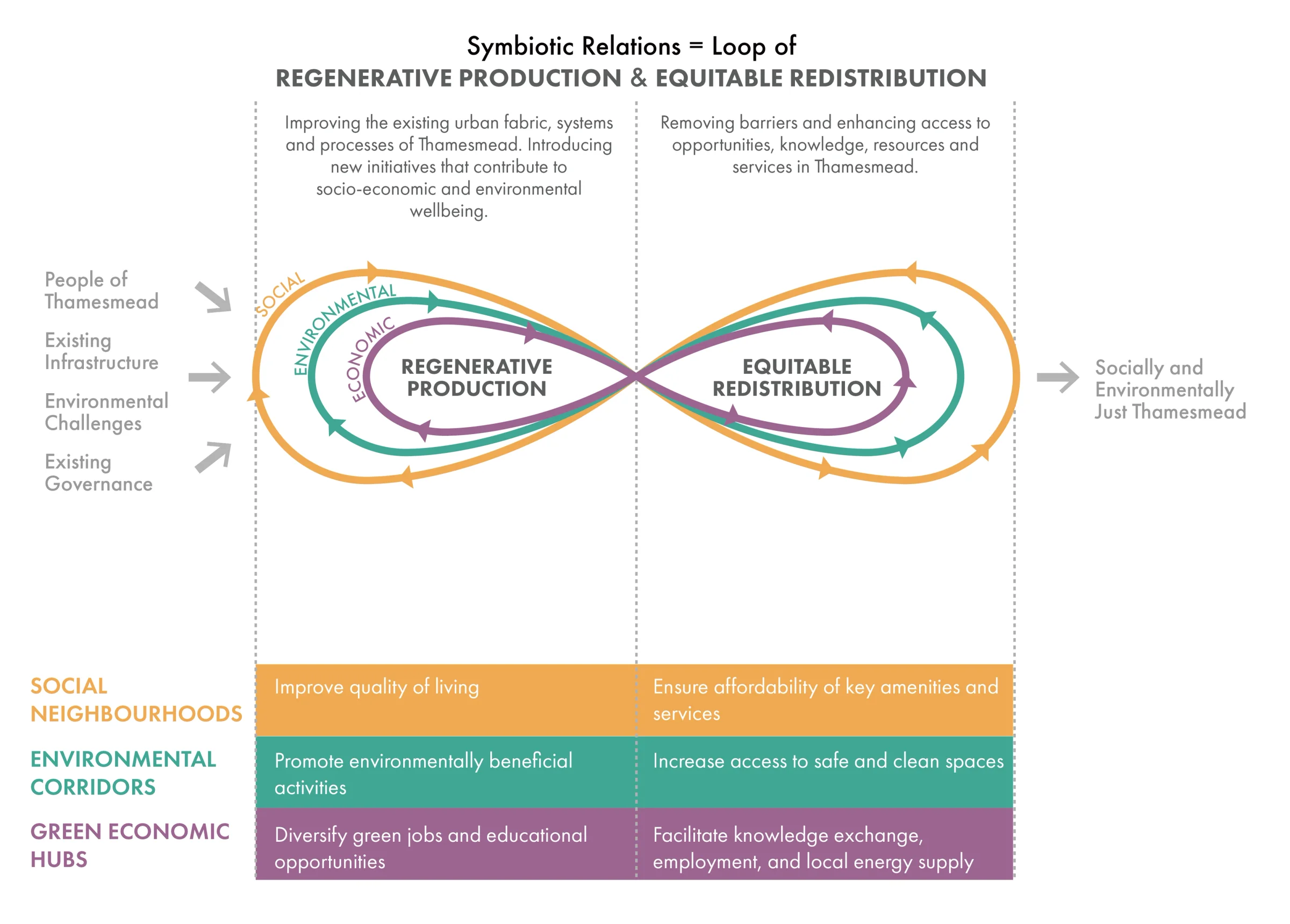
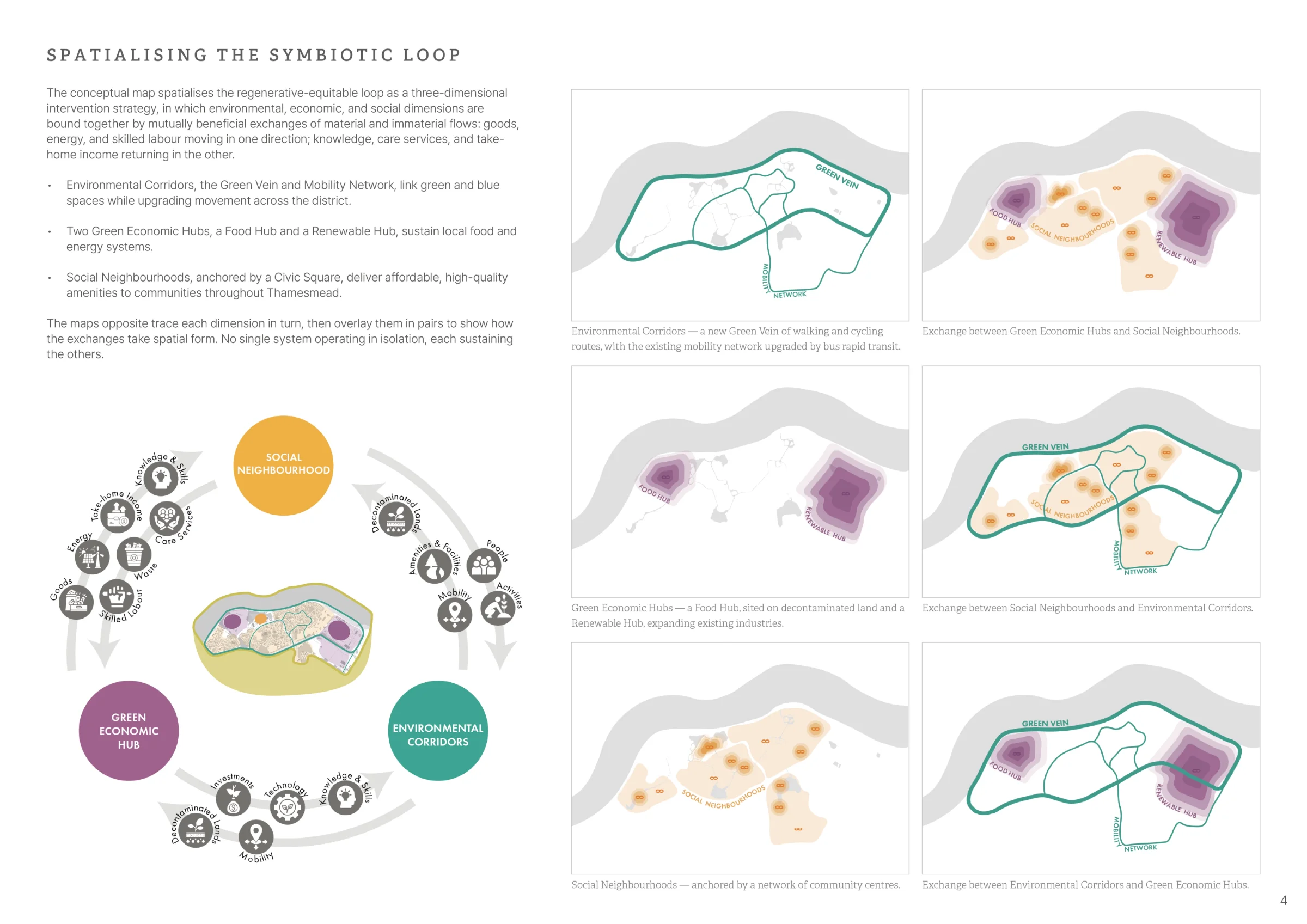
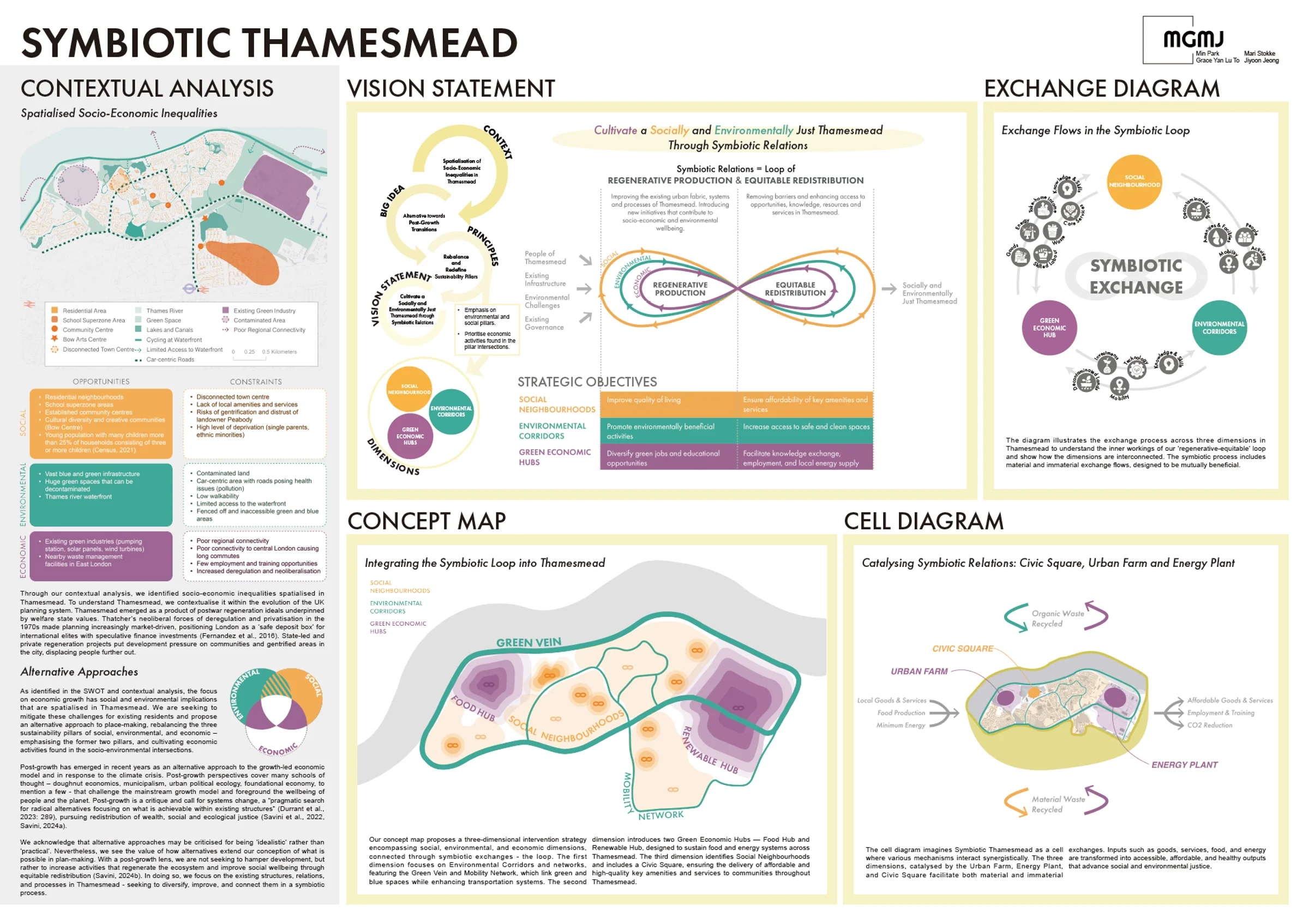
This project proposes a systemic urban strategy for Thamesmead, London, addressing deeply rooted socio-economic and environmental inequalities through a model of “symbiosis.” Rather than treating social, economic, and ecological issues as separate domains, the project constructs an integrated framework where each system actively supports and reinforces the others. The central concept “Symbiotic Thamesmead” is built on a continuous loop between regenerative production and equitable redistribution, forming a self-sustaining urban metabolism.
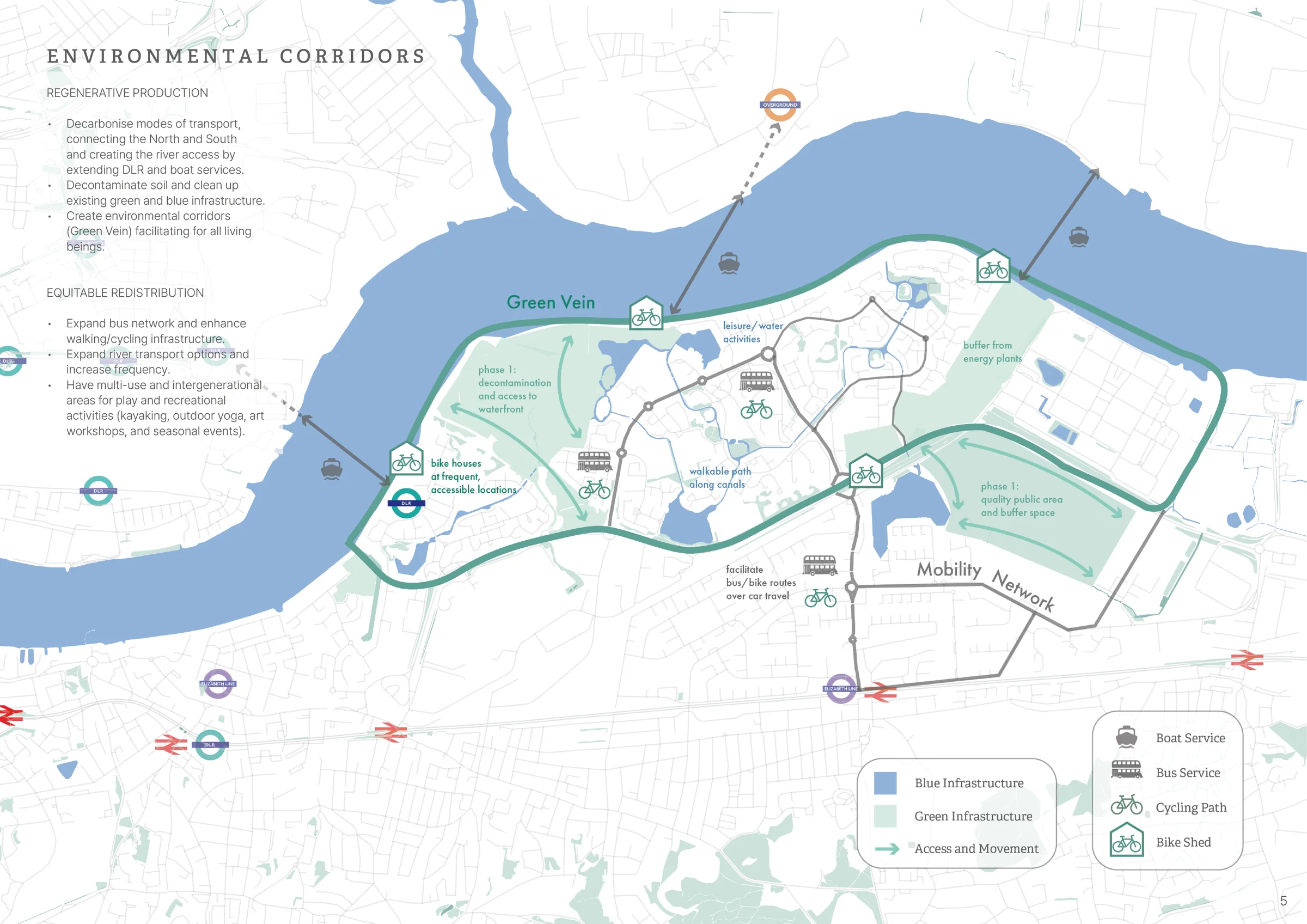
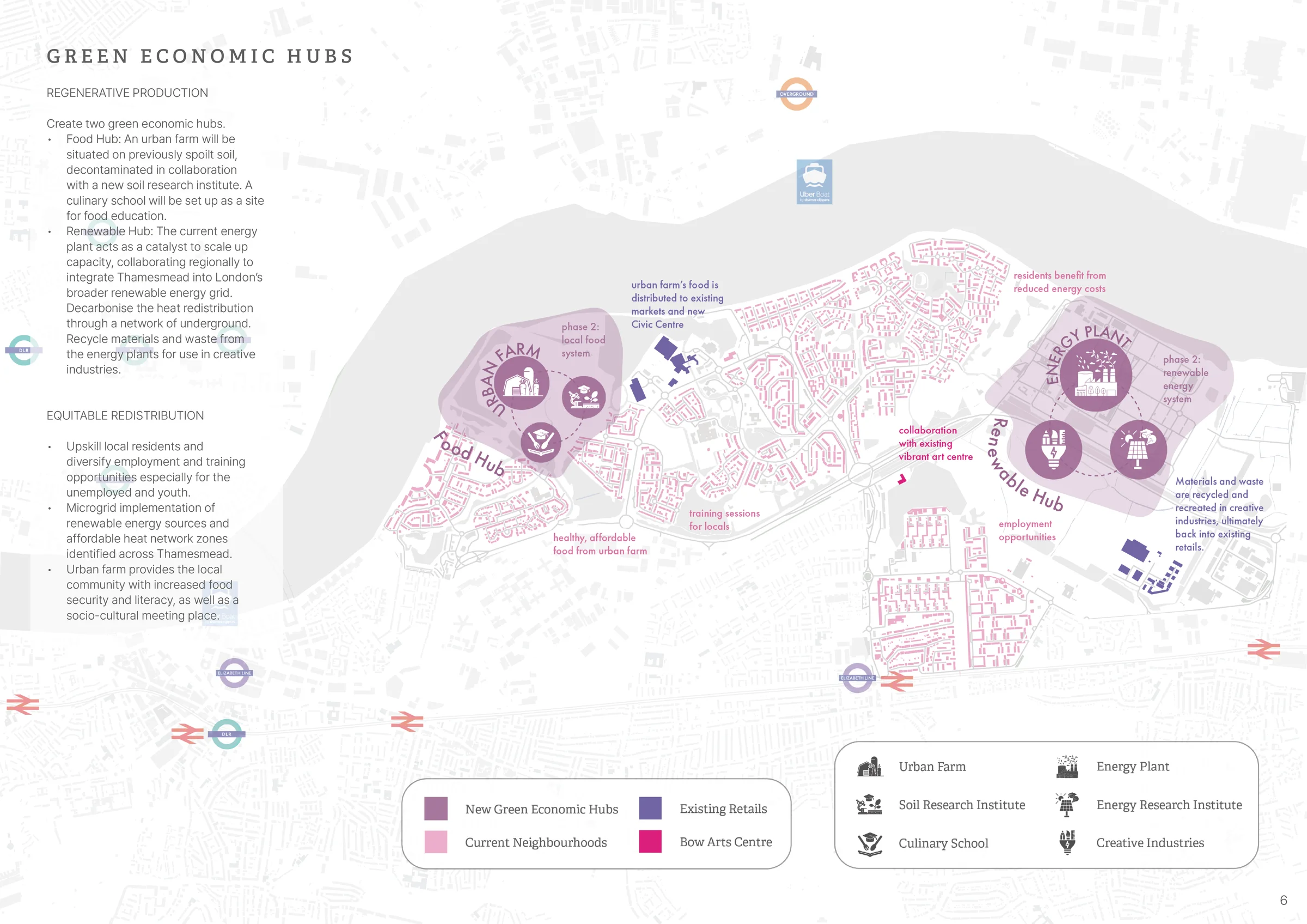
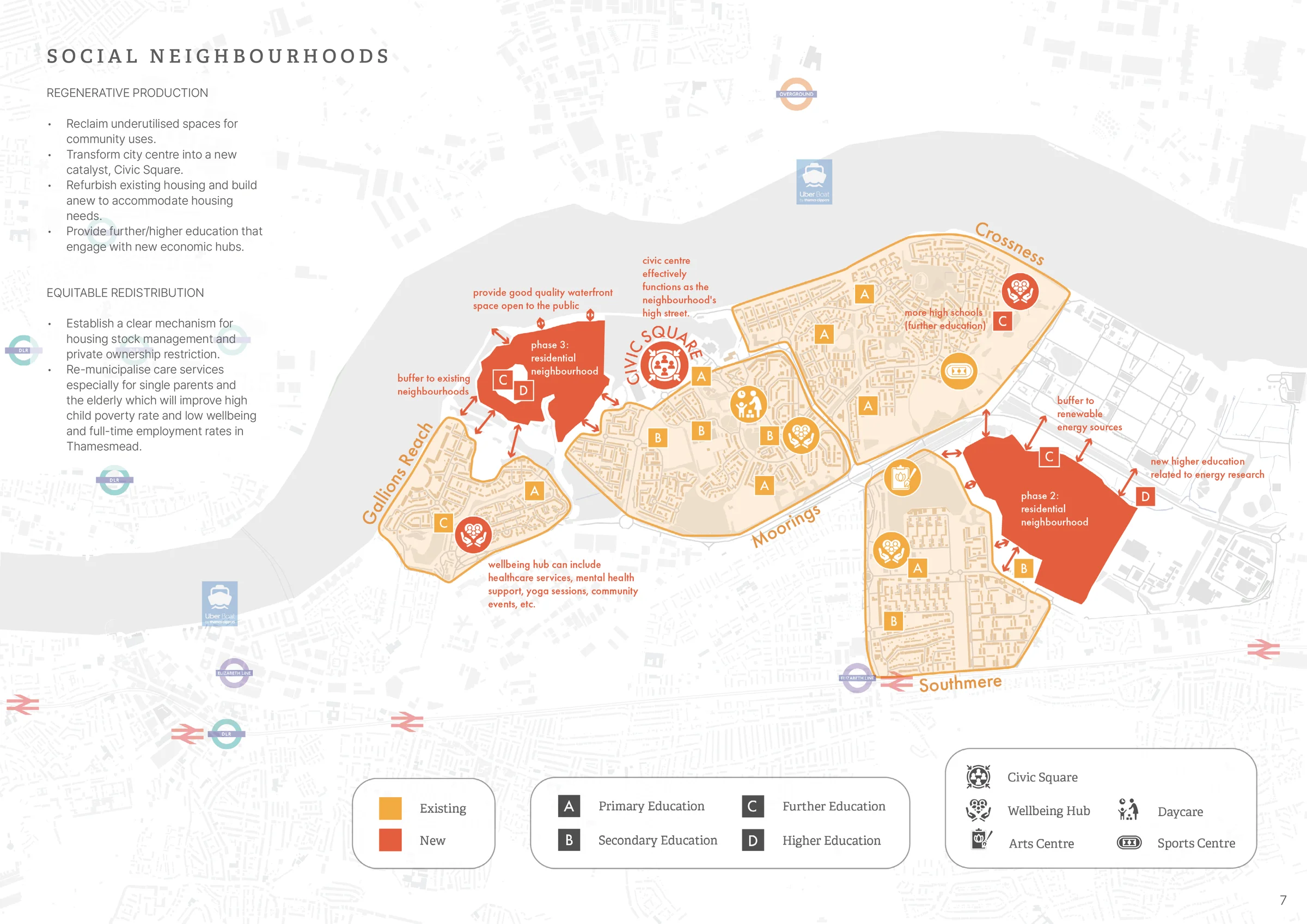
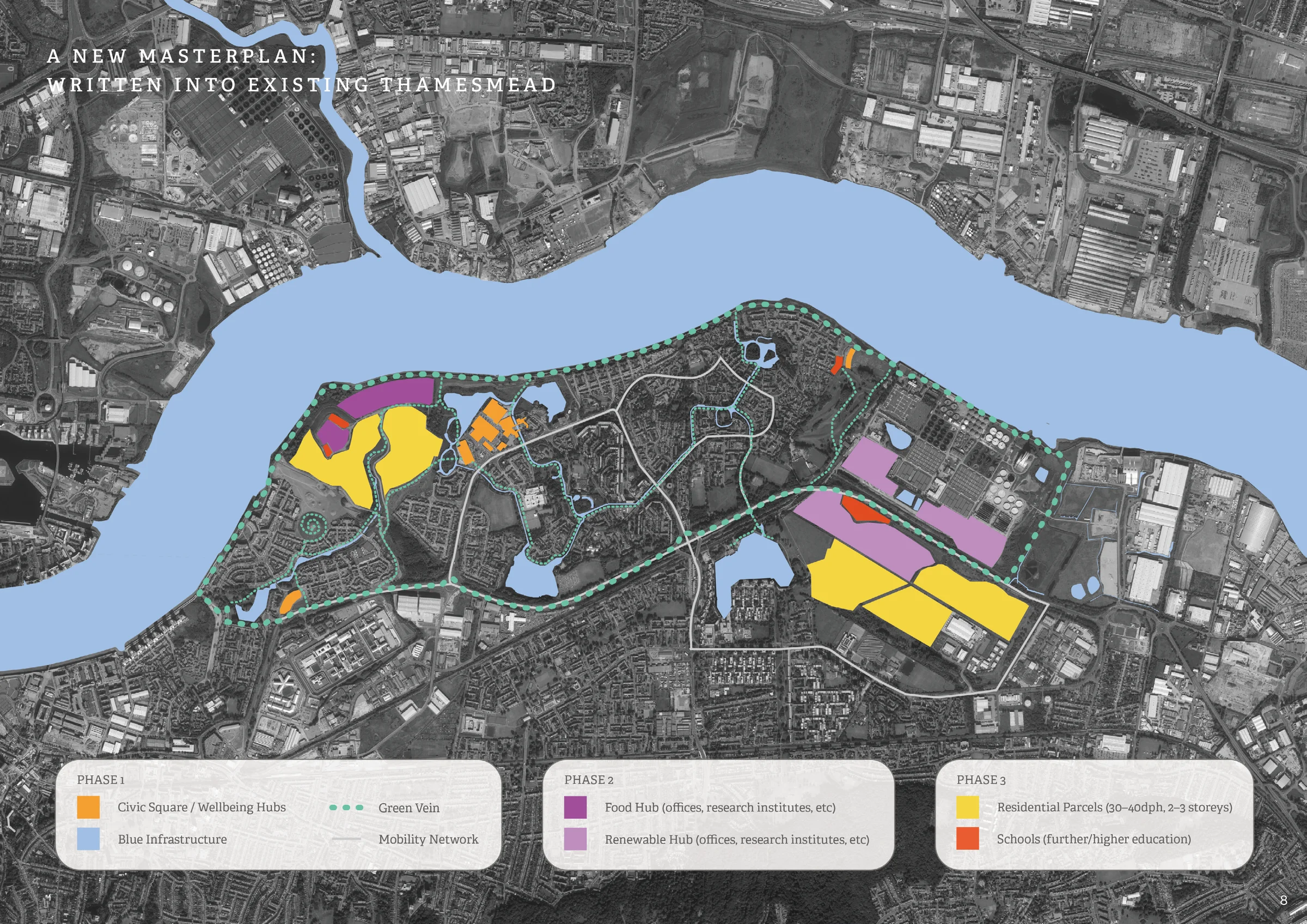
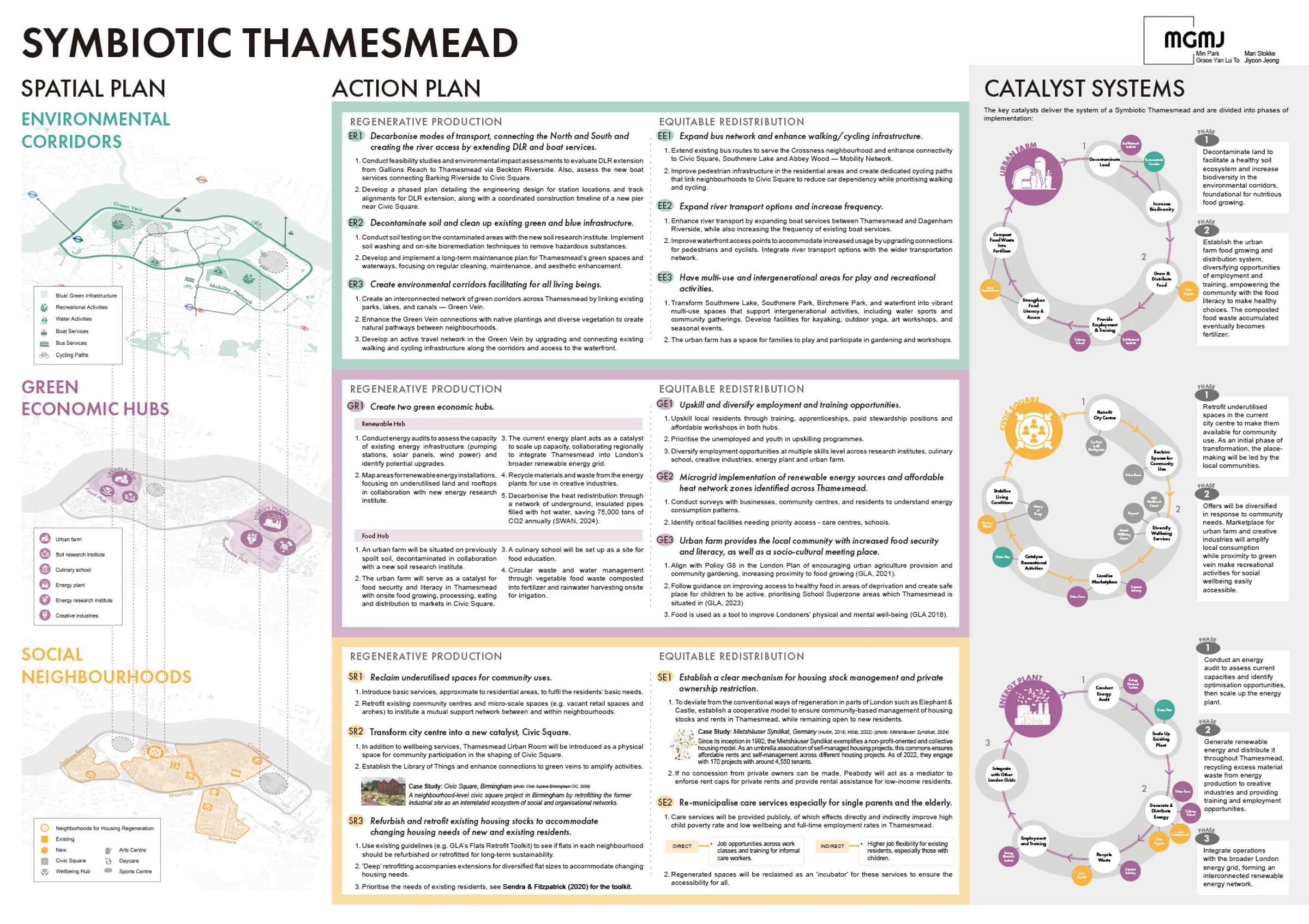
The spatial strategy operates across three interrelated layers: environmental corridors, green economic hubs, and social neighbourhoods. Environmental corridors repair fragmented green and blue infrastructure, improving ecological performance while creating accessible public landscapes. Green economic hubs introduce localized systems of production—such as renewable energy, urban farming, and circular resource management—to generate jobs and reduce dependency on external supply chains. Social neighbourhoods focus on upgrading housing, community services, and civic spaces to ensure that benefits are distributed fairly and embedded within everyday life.
The action plan translates this framework into targeted interventions. On the production side, it includes decentralized energy systems, food hubs, and environmental restoration. On the redistribution side, it prioritizes mobility equity, access to services, affordable housing, and inclusive public space. These are not isolated projects but coordinated mechanisms, designed to circulate resources, knowledge, and opportunities across the territory.
A key strength of the proposal lies in its multi-scalar logic. At the macro level, it establishes territorial connections through green corridors and mobility networks. At the micro level, it introduces catalytic nodes—such as civic squares, urban farms, and energy plants—that function as “cells” of symbiotic exchange. These nodes enable tangible flows: waste becomes energy, energy supports local production, and production feeds community life. The exchange diagram reinforces this logic, illustrating how social, environmental, and economic systems are interdependent and continuously interacting.
Ultimately, the project reframes Thamesmead not as a site of deficit, but as a platform for regenerative urbanism. By aligning spatial design with systemic processes, it proposes a model where growth is not extractive, but circular, inclusive, and locally grounded.